Severe period pain
Pain gets normalized or self-managed rather than evaluated, especially when nobody has told you what level of pain warrants care.

Khora helps students with unresolved reproductive-health symptoms figure out whether to see someone, what kind of clinician to see, and where to find one who is nearby, in network, and actually available, and we stay with you until that next step happens.
We don't diagnose. We help you reach the clinicians who can.
Clinical evaluation, testing and treatment stay with licensed clinicians and the health system you already have access to.
Pain gets normalized or self-managed rather than evaluated, especially when nobody has told you what level of pain warrants care.
Irregularity often doesn't trigger follow-up until it becomes disruptive, or until something else prompts a visit.
Can span primary care, OB-GYN, endocrinology, dermatology and nutrition, which makes "who do I book with?" a genuinely hard question.
Persistent pelvic pain often needs specialized evaluation beyond what a student knows how to access on their own.
The problem isn't always a lack of healthcare. It's getting students to the right healthcare.
A short, clinician-reviewed assessment about your symptoms and what you need from care. Voluntary, and yours to stop at any point.
Education and next-step guidance based on your answers, what your symptoms could warrant looking into, without handing you a diagnosis you didn't get from a clinician.
If further evaluation may help, we help you work out the right type of clinician and find campus or local in-network options you can actually get into.
Practical help with where to go, how to book, and the usual walls, network participation, no availability, being told to call back next month.
We keep going until you've connected with the next step, you tell us to stop, or we document exactly what blocked you, so it can be fixed for the next student.
“The answer isn't always a better technology, but rather just a better way of doing things.”
Khora is built by a team working across women's health research, clinical epidemiology, engineering and early-stage investment, with one shared focus: making reproductive care easier to reach.

2x TEDx speaker and women's health activist with a Master's in Epidemiology from Johns Hopkins Bloomberg School of Public Health. Her work sits between women's health, reproductive endocrinology, venture capital and new business models for access.
Creator of The Hormonal Podcast; has consulted for women’s health companies and nonprofits.

Studying Computer Science with a focus in applied mathematics, data science, and computational medicine at Johns Hopkins Whiting School of Engineering. Partner at A-Level Capital, data scientist at Arboretum Lifesciences, and fellow at Dorm Room Fund, with prior experience at IBM, Boeing and UC Irvine.
Focused on representation of and investment in women across technology and research.


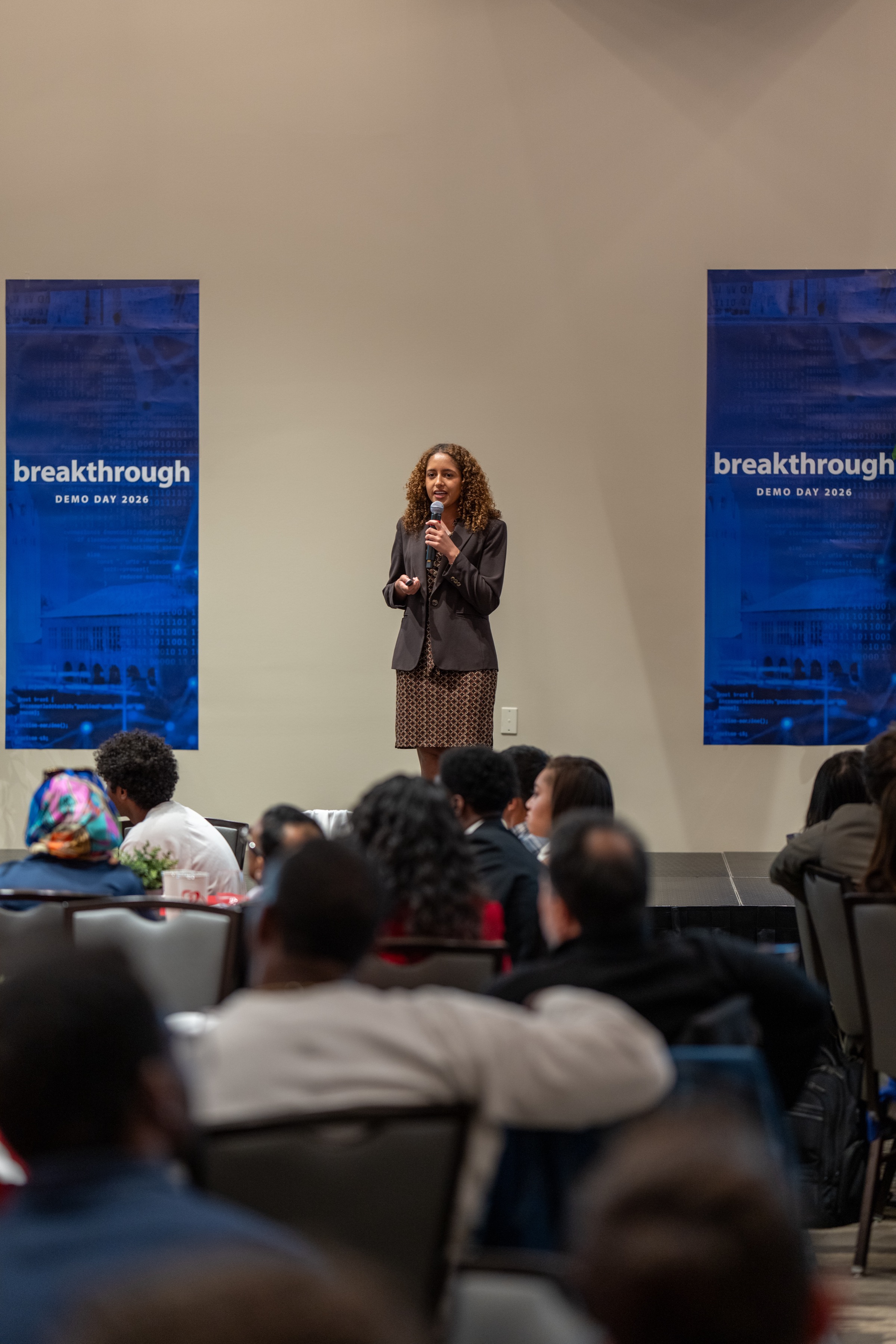
We took the case for navigation to a room of builders and researchers: why reproductive care so often fails at the handoff rather than the diagnosis, and what changes when someone stays with a student until the appointment actually happens.
After completing the Breakthrough Accelerator, we presented Khora to investors, innovators, students, and faculty at Stanford.
Speaking, press and event invitations: info@khoraintelligence.com


We run one-semester navigation pilots with student health services and OB-GYN departments, fixed cost, aggregate outcomes report, no EHR integration required to start.